Best GPU for AI in 2025
The artificial intelligence (AI) landscape is rapidly evolving, transforming business operations and digital innovation at an unprecedented pace. At the core of this revolution stands the Graphics Processing Unit (GPU), a piece of hardware that has transcended its original purpose of enhancing computer graphics to become an essential component in AI development. For those involved in AI projects or Web3 protocols leveraging AI capabilities, understanding GPU technology is crucial for success.
Why GPUs Are Essential for AI Development
While Central Processing Units (CPUs) excel at sequential processing with high clock speeds, AI applications demand parallel processing capabilities for handling massive datasets. GPUs, with their thousands of cores, are specifically designed to handle such parallel computations efficiently. Here’s why GPUs have become indispensable for AI:
- Parallel Processing Capabilities
- Thousands of cores working simultaneously
- Efficient handling of complex AI algorithms
- Significantly faster dataset processing
- Superior Memory Bandwidth
- Higher data transfer rates compared to CPUs
- Reduced processing bottlenecks
- Faster access to large datasets
- Specialized Architecture
- Dedicated Tensor Cores for AI workloads
- Optimized hardware for deep learning
- Enhanced performance for AI-specific tasks
Top 5 GPUs for AI Applications in 2025
-
NVIDIA A100 – Professional Grade Performance


- Industry-leading processing power
- Exceptional memory bandwidth
- Advanced Tensor Cores
- Ideal for large-scale research and commercial applications
- Premium pricing reflects professional-grade capabilities
-
NVIDIA RTX 4090 – High-End Consumer Choice

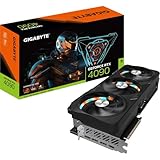


- Strong performance-to-price ratio
- Latest generation Tensor Cores
- DLSS technology integration
- Suitable for demanding AI workloads
- More accessible pricing than professional models
-
NVIDIA RTX A6000 – Professional Middleground
| # | Preview | Product | Price | |
|---|---|---|---|---|
| 1 |

|
PNY NVIDIA RTX A6000 | Buy on Amazon | |
| 2 |

|
NVD RTX PRO 6000 Blackwell Professional Workstation Edition Graphics Card for AI, Design,... | Buy on Amazon |
- Balanced performance and cost
- Professional-grade reliability
- Substantial memory capacity
- Optimized for complex AI projects
- Ideal for research and development
-
AMD Radeon RX 7900 XTX – Value Flagship Option


- Competitive performance metrics
- Cost-effective alternative to NVIDIA
- Strong processing capabilities
- Ample memory configuration
- Excellent for budget-conscious professionals
-
NVIDIA RTX 4080 SUPER – Entry-Level AI Solution


- Previous generation technology
- Reliable performance
- Cost-effective entry point
- Suitable for learning and development
- Good value in the used market
Choosing the Right GPU: Performance vs. Budget
The selection of an appropriate GPU depends heavily on specific project requirements and budget constraints. Here’s a breakdown of considerations for different user categories:
Professional Users
- Focus on high-performance options like NVIDIA A100
- Priority on processing speed and reliability
- Higher budget allocation
- Emphasis on scalability
- Professional support requirements
Intermediate Users
- Consider RTX 4090 or AMD Radeon RX 7900 XTX
- Balance between performance and cost
- Moderate budget requirements
- Suitable for various AI applications
- Good long-term investment
Entry-Level Users
- Look at RTX 4080 SUPER or similar previous-generation cards
- Focus on learning and development
- Budget-friendly options
- Adequate for basic AI tasks
- Good starting point for experimentation
Alternative Solutions: GPU Rental Services
For those seeking flexibility or unable to commit to hardware purchases, GPU rental services offer viable alternatives:
Benefits of GPU Rental
- Pay-as-you-go pricing
- Access to high-end hardware
- No maintenance concerns
- Scalable resources
- Ideal for occasional use
AMD vs. NVIDIA: Market Competition
The GPU market continues to be dominated by two major players, each offering distinct advantages:
NVIDIA Advantages
- Established AI development ecosystem
- CUDA framework popularity
- Superior software support
- Extensive documentation
- Broader compatibility
AMD Benefits
- Competitive pricing
- Improving software support
- Strong performance metrics
- Growing ecosystem
- Value proposition
Generative AI Considerations
The growing field of generative AI places specific demands on GPU hardware:
Requirements
- Substantial memory capacity
- High processing power
- Advanced Tensor Core capabilities
- Efficient memory bandwidth
- Reliable performance
Practical Applications
- Image generation
- Audio processing
- Video creation
- Text generation
- Complex modeling
Future Trends and Recommendations
The AI GPU market continues to evolve, with several trends shaping future developments:
Emerging Trends
- Increasing memory capacities
- Enhanced AI-specific features
- Improved energy efficiency
- Better price-performance ratios
- Growing competition
Recommendations for Users
- Assess specific project needs
- Consider long-term requirements
- Evaluate software compatibility
- Account for power consumption
- Factor in upgrade paths
Conclusion
The selection of an appropriate GPU for AI applications requires careful consideration of various factors, including performance requirements, budget constraints, and specific use cases. While high-end options like the NVIDIA A100 offer unmatched performance for professional applications, mid-range and entry-level options provide viable alternatives for different user categories.
The continual evolution of GPU technology, coupled with increasing competition between manufacturers, promises to bring more powerful and cost-effective solutions to the market. Whether choosing a top-tier professional card or a budget-friendly option, understanding the relationship between hardware capabilities and project requirements remains crucial for success in AI development.
For those entering the field or working on specific projects, careful evaluation of these factors will help ensure the selected GPU meets both current needs and future growth potential. As AI continues to advance, the role of GPUs in driving innovation and development will only become more significant, making informed hardware choices increasingly important for success in this rapidly evolving field.